Industrial:
the boring one that keeps winning.
Small-bay, distribution, cold storage, IOS. Why industrial is the safest long-term CRE bet nobody gets excited about, and where the juice still is in 2026.
TL;DR
Industrial is the category most institutional buyers want more exposure to. The winners are in supply-constrained infill markets with strong logistics demand. Know your subtype (small-bay, distribution, IOS, cold storage) and don't overpay on trailing rent.
What is industrial real estate?
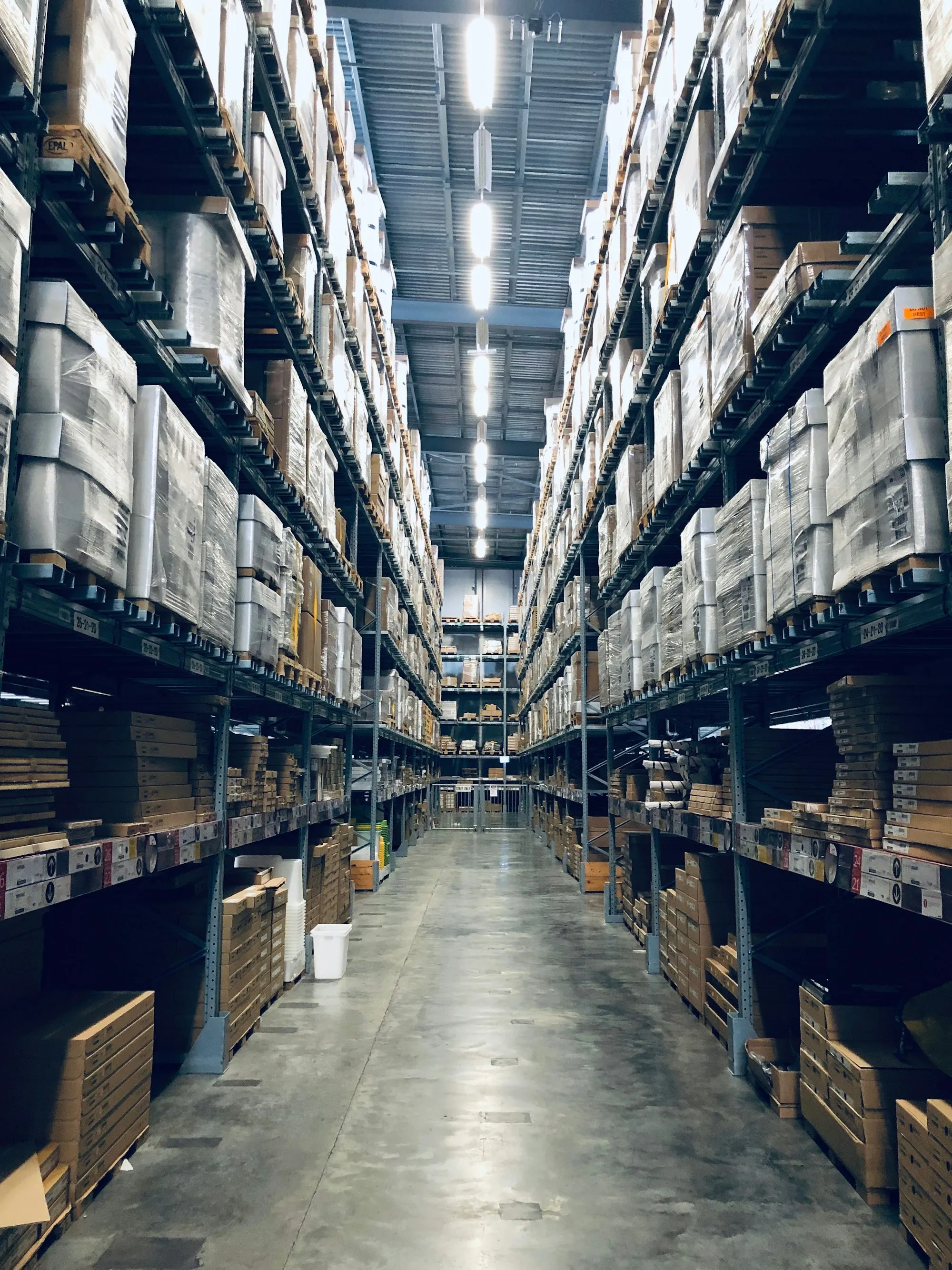
Industrial real estate is the commercial property category covering manufacturing, warehousing, distribution, logistics, storage, flex/R&D, and related uses. It is the largest CRE sector by total inventory (over 17 billion square feet in the U.S.) and one of the fastest-growing by capital deployment, driven by e-commerce, supply chain investment, and corporate reshoring.
What makes industrial institutional-grade is the combination of (a) long-term leases with credit-quality tenants, (b) triple net structure that limits landlord expense exposure, and (c) functional buildings that serve a wide tenant base if the primary user leaves.
The industrial taxonomy
Industrial is not one category — it's a stack of subtypes with different economics:
Small-bay and flex
Buildings under 50,000 square feet, typically broken into 1,000–10,000 SF units for small businesses, contractors, service tenants, and light-industrial users. Lower rents per square foot, higher tenant turnover, more management-intensive, but higher cap rates and a remarkably resilient tenant base.
Mid-bay distribution
Buildings 50,000–250,000 SF with modern specs: 28–32 foot clear heights, ESFR sprinkler systems, LED lighting, truck court depths of 130+ feet, and dock door ratios of 1 per 5,000–8,000 SF. Tenants include regional distributors, 3PLs, and mid-market logistics users.
Big-box and mega-box distribution
Buildings over 250,000 SF serving national retailers, e-commerce operators, and major 3PLs. Typically in logistics corridors near interstates or airports. Tenants tend to be credit-grade (Amazon, FedEx, UPS, Walmart, Home Depot). Long leases, lower cap rates, concentrated tenant risk.
Industrial outdoor storage (IOS)
Fenced, paved yards with limited structures — often under 10% of site area. Tenants are trucking companies, container depots, construction contractors, and logistics staging users. IOS emerged as an institutional asset class in the last decade as supply constraints in infill markets made yard storage scarce. Cap rates have compressed significantly but remain wider than traditional industrial.
Cold storage
Refrigerated warehouse space for food, pharmaceuticals, and chemicals. Higher construction cost (double the per-SF cost of dry warehouse) and higher operating cost (power is 30–50% of operating expense). Specialty tenants, meaningful barriers to new supply. Attracts a narrower buyer pool.
Manufacturing and R&D
Specialized buildings serving manufacturing or research tenants. Often tenant-specific, with equipment and improvements that don't transfer cleanly on re-leasing. Higher underwriting risk; more conservative leverage.
How do you read an industrial lease?
Key terms to check on any industrial lease:
- Base rent and escalations. Annual or periodic bumps, CPI-indexed clauses, renewal option rent resets.
- Term and options. Initial term plus extension option count and duration.
- Tenant and guarantor. Operating entity vs. parent guarantee. For regional tenants, verify the signing entity's balance sheet separately.
- Responsibility matrix. Roof, structure, HVAC, parking lot, landscaping — who pays, who performs.
- Tenant improvements. What the tenant installed. Whether those stay with the building on exit.
- Go-dark and continuous-operation clauses. Can the tenant stop operating? Relevant for distribution where corporate users consolidate facilities.
- Assignment and subletting. Can the tenant assign to a weaker credit without landlord approval?
- Hazardous materials. Environmental rep and indemnity — critical for older buildings and specific tenant types.
How do industrial cap rates work?
Industrial cap rates vary significantly by subtype, market, and tenant. As a 2026 rough guide:
- Credit-tenant net lease big-box distribution, primary markets: 5.25–6.25%
- Multi-tenant mid-bay distribution, primary markets: 6.00–7.00%
- Small-bay flex, secondary markets: 7.00–8.50%
- IOS, infill markets: 6.00–7.50%
- Cold storage, primary markets: 6.25–7.50%
These compressed substantially between 2015 and 2022 (e-commerce + capital flows), then widened 50–150 bps as rates rose. Cap rates remain market-, tenant-, and spec-specific — a functional 32' clear modern distribution in Dallas-Fort Worth at a 6% cap is a different deal from a 28' clear older building in a tertiary market at the same cap.
What makes a good industrial location?
Location in industrial comes down to logistics access and tenant pool depth:
Logistics corridors
Major distribution corridors have logistics infrastructure — interstate access, rail served, truck terminals, intermodal facilities. Inland Empire (CA), Dallas-Fort Worth, Columbus, Chicago, Atlanta, Indianapolis, Louisville, Memphis are classic primary logistics hubs. Each supports large-format distribution tenants at scale.
Last-mile / infill
Close-in properties in major population centers where e-commerce fulfillment demands fast delivery. Supply is supply-constrained (you cannot easily build new industrial in dense urban submarkets). Rents per square foot are 2–3x outer-suburban distribution rents. Tenants are willing to pay for proximity.
Port-adjacent
Properties near major U.S. ports (LA/Long Beach, Savannah, New York/New Jersey, Houston) that serve import-export and container-handling users. Port volume is cyclical; location is durable.
What are the functional specs that matter?
For modern distribution, these specs typically determine whether a building competes:
- Clear height. 28 feet minimum for modern; 32 feet preferred; 36–40 feet for advanced high-cube distribution. Older buildings at 20–24 feet are functionally obsolete for many tenants.
- Truck court depth. 130 feet minimum for 53' trailers to turn; 185 feet for drive-through configurations.
- Dock doors. Ratio of 1 per 5,000–8,000 SF for distribution; lower for bulk storage.
- Column spacing. 52' x 50' minimum for modern; wider for robotic fulfillment.
- Floor load. 6–8 inch reinforced concrete slabs for heavy racking.
- Power. 1,600–4,000 amps for distribution; more for cold storage and manufacturing.
- Parking. Auto (1 per 1,500 SF typical) and trailer (varies by tenant).
Functional obsolescence is the industrial risk that looks small on paper and large at re-leasing. An older building with short clear height and inadequate dock count cannot serve modern distribution tenants at any rent.
What are common industrial landmines?
- Buying on trailing rent. Rents moved 40–80% in many primary industrial markets between 2019 and 2022. A T-12 rent at the old level does not predict the renewal rent.
- Underwriting corporate renewals. Consolidation, automation, and site rationalization by major tenants (Amazon, FedEx) have produced dark-store situations in otherwise strong markets.
- Ignoring environmental risk. Older industrial has real environmental exposure — solvents, underground tanks, former manufacturing uses. Always Phase I, often Phase II for properties with any industrial history.
- Overpaying for IOS. IOS cap rates compressed rapidly 2020–2022. Paying 5% cap for IOS in 2026 assumes compression holds — aggressive unless basis is strong.
- Functional obsolescence. A 22' clear building in a 32' clear market cannot compete for modern distribution at market rent. Plan for substantial capex or repositioning — or accept a non-distribution tenant base.
- Construction lien and mechanics issues. Large tenants frequently install substantial improvements. Mechanics' liens and title issues at sale are common.
- Truck court insufficiency. 120' truck courts on a building intended for 53' trailer traffic cost real money at lease-up — tenants will pass.
Industrial in a 1031 exchange
Industrial is a strong 1031 replacement category for exchangers moving from management-intensive assets (multifamily, small-bay office) to longer-lease, lower-touch ownership. Institutional single-tenant industrial with credit tenants on 10+ year leases provides a close approximation of net-lease retail (NNN, absolute NNN) with similar cap rate bands but larger deal sizes and broader tenant-type diversification.
Three 1031 considerations specific to industrial:
- Deal size alignment. Institutional industrial deals are typically $10M+. Exchangers with smaller proceeds may need to split into multiple industrial properties or combine with DSTs.
- Environmental diligence timing. Industrial properties often need Phase I (and sometimes Phase II) environmental site assessments. Build that into your 180-day timeline.
- Tenant credit concentration. Single-tenant industrial has the same credit-concentration risk as single-tenant retail. Diversify across tenants or asset types when possible.
Frequently asked questions
What is the difference between Class A, B, and C industrial?
Class A industrial is typically post-2000 construction with 30'+ clear heights, modern dock ratios, and institutional-grade finishes in primary logistics corridors. Class B is typically 1980–2000 with 24–28' clear heights. Class C is pre-1980 or functionally obsolete for modern distribution.
How is industrial leased differently than retail or office?
Industrial leases are typically longer (7–15 years common vs. 5 years in office), more purely triple-net, with fewer common-area complexity issues than multi-tenant retail or office. Tenant improvements are typically tenant-funded with landlord TI allowances for major users.
Why are cold storage cap rates higher than dry warehouse?
Cold storage carries higher construction costs, higher operating expenses (power is a major line), narrower tenant pool, and more specialized re-leasing challenges if the primary tenant vacates. Those factors combine to widen cap rates relative to dry industrial.
Is IOS really an institutional asset class?
Yes — major institutional investors (Prologis affiliates, J.P. Morgan, Ares, Peakstone) have established IOS-specific investment programs. REITs have launched IOS-focused strategies. That said, data is still thinner than for traditional industrial; underwrite conservatively.
What's the outlook for industrial rents in 2026?
Primary-market industrial rents cooled from 2022 peaks as supply deliveries caught up to demand. Year-over-year rent growth is near flat to modestly positive in most primary markets. Infill last-mile and IOS continue to outperform. Tertiary market overbuild is a concern — specific submarkets warrant caution.
How do e-commerce trends affect industrial demand?
E-commerce growth requires roughly 3x the distribution square footage per dollar of sales compared to brick-and-mortar retail. E-commerce penetration has continued to grow, supporting industrial demand through the medium term. The specific demand is for last-mile (close to population) and regional distribution (inside 250 miles of population centers).
Using industrial in a 1031 exchange
Get the full 1031 Playbook.
Subscribe to The Upleg and we'll email the link — 45/180 timelines, QI checklist, and a full walk-through of industrial as 1031 replacement. Free.